The Importance of CLP Labels on Your Wax Melts
The Importance of CLP Labels on Your Wax Melts: Ensuring Safety and Compliance
Wax melts have become a popular choice for home fragrance enthusiasts due to their convenience and the variety of scents available. However, like any product that involves chemicals, it is crucial to ensure that they are used safely. One way to guarantee this safety is through the use of CLP labels. But what exactly are CLP labels, why are they important for wax melts, and what information should they contain? In this blog post, we’ll delve into the significance of having a CLP label on your wax melts, breaking down the requirements and highlighting the critical role of allergen information.
What is a CLP Label?
If you’ve bought Hazey Daze wax then you will have noticed the white label on the back of the bars, these are the CLP labels and each scent has its own unique wording. Other brands may have this label on the front but any wax brand that is legitimate will ALWAYS provide these labels.
Heres the technical stuff….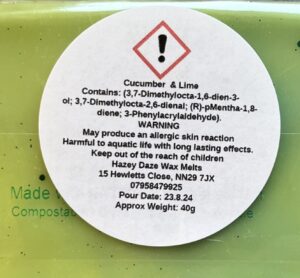
CLP stands for “Classification, Labelling, and Packaging,” a regulation that applies to chemical products within the European Union (EU) and the UK. The CLP Regulation, introduced in 2009, aligns with the United Nations’ Globally Harmonised System (GHS) of classification and labelling of chemicals. The purpose of this regulation is to ensure that consumers are informed about the potential hazards associated with chemical products, enabling them to handle these products safely.
For wax melts, which are often made using a combination of wax, fragrance oils, and dyes, a CLP label is essential. It provides critical information about any hazards that may arise from the product, whether during its use, storage, or disposal.
Breakdown of CLP Label Requirements
The requirements for a CLP label are comprehensive and are designed to provide the end-user with as much information as possible. Here is a breakdown of what needs to be included:
– Name of the scent: The scent name or identifier should be clearly displayed.
– Chemical Name of Hazardous Substances: If a product contains hazardous substances above certain thresholds, the chemical names of these substances must be listed.
– Hazard Pictograms: CLP labels must include relevant pictograms that visually communicate the type of hazard the product presents. Common pictograms include the exclamation mark for irritants and the flame for flammable substances.
– Signal Words: Words such as “Warning” or “Danger” should be used to indicate the severity of the hazard. For instance, “Danger” is used for more severe hazards, while “Warning” is for less severe hazards.
– Hazard Statements: These are standardised phrases that describe the nature of the hazard(s) associated with the substance or mixture. For example, “May cause an allergic skin reaction” or “Toxic to aquatic life with long-lasting effects.”
– Precautionary Statements: Precautionary statements provide advice on how to minimise or prevent adverse effects resulting from exposure to the product. This could include instructions on safe handling, storage, or first aid measures, such as “Wear protective gloves” or “If on skin, wash with plenty of soap and water.”
– Supplier Information: The label must include the name, address, and telephone number of the supplier, manufacturer, or distributor responsible for placing the product on the market.
– Quantity of the Product: The quantity of the product (in weight or volume) should be stated on the label if it weighs over a certain amount.
Variations in CLP Labelling Based on Scent
Each fragrance oil used in wax melts has a unique chemical composition, which means that CLP labelling requirements can vary significantly from scent to scent. The concentration and type of allergens or hazardous substances present in a fragrance oil dictate the specific hazard and precautionary statements that must be included on the label.
For example:
– Citrus Scents: Often contain limonene, a chemical that is flammable and can cause skin irritation or allergic reactions. The CLP label would need to include a pictogram of a flame and a hazard statement such as “Flammable liquid and vapour” or “May cause an allergic skin reaction.”
– Floral Scents: Might contain compounds like linalool or eugenol, which can also cause allergic reactions. The label might include a hazard statement like “Harmful if swallowed” or “May cause an allergic skin reaction.”
The variability in chemical composition means that each scent must be individually assessed, and the CLP label must be tailored to reflect the specific risks associated with that scent.
The Importance of Stating Allergens on the Label
One of the most critical aspects of CLP labelling, particularly for wax melts, is the declaration of allergens. Many fragrance oils contain substances that can cause allergic reactions, even at low concentrations. Stating these allergens on the label is not just a legal requirement but also a crucial safety measure.
Why Allergen Information Matters?
Allergens in wax melts, like those in any other fragranced product, can cause a range of reactions from mild skin irritation to severe respiratory distress. The presence of allergens such as limonene, linalool, and citronellol must be clearly indicated on the CLP label if they are present in concentrations exceeding 0.01% in the final product.
By listing allergens on the label, you provide consumers with the information they need to make informed decisions about the products they use. For individuals with known allergies, this information is vital in preventing allergic reactions. Furthermore, if an allergic reaction does occur, having the allergens listed on the label can help medical professionals quickly identify the cause and administer the appropriate treatment.
Responding to Allergic Reactions
If a consumer experiences an allergic reaction to a wax melt, the first step is to check the CLP label for the allergens listed. This can provide immediate clues about what might have triggered the reaction. Medical personnel can use this information to determine the best course of action, whether it’s administering antihistamines, steroids, or other treatments. Without this critical information, identifying the allergen could take much longer, potentially worsening the individual’s condition.
Conclusion: CLP Labels Are Essential for Safe Use of Wax Melts
In conclusion, the importance of having a CLP label on your wax melts cannot be overstated. These labels serve as a vital tool for communicating the potential hazards associated with the product, ensuring that consumers can use them safely and responsibly. They are legally required and must be tailored to the specific risks presented by each scent variant, particularly concerning allergens.
For manufacturers and sellers of wax melts, complying with CLP regulations is not just about legal adherence—it’s about prioritising the safety and well-being of consumers. For consumers, understanding and reading these labels is equally important in making informed choices and preventing adverse reactions.
As the demand for wax melts continues to grow, so too does the responsibility of ensuring that these products are both delightful and safe to use. The CLP label is a small but powerful tool in achieving this balance.